
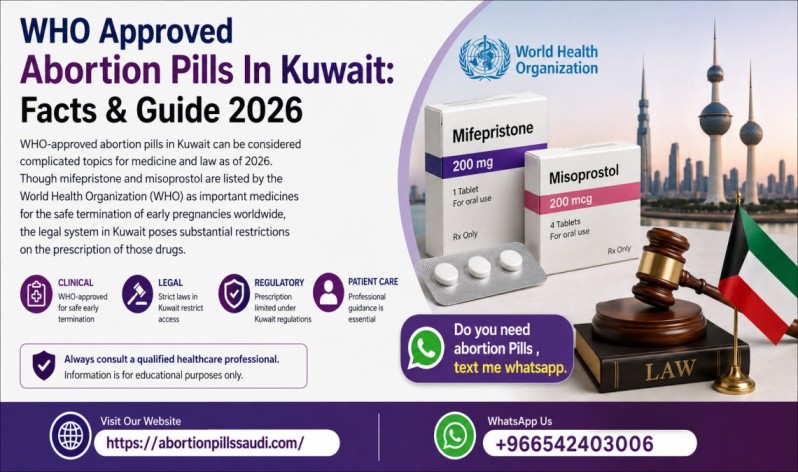
WHO-approved abortion pills in Kuwait can be considered complicated topics for medicine and law as of 2026. Though mifepristone and misoprostol are listed by the World Health Organization (WHO) as important medicines for the safe termination of early pregnancies worldwide, the legal system in Kuwait poses substantial restrictions on the prescription of those drugs. Here we will provide an evidence-based guide that includes clinical, regulatory, legal, and patient-related information about WHO-approved abortion pills
⚠ Medical Disclaimer: The present article provides only informational content. Do not consider it medical advice, a diagnosis, or treatment of any illness. If necessary, consult your licensed healthcare provider. Check the local abortion laws for your country.
What Are WHO-Approved Abortion Pills?
The WHO-approved abortion pills imply mifepristone and misoprostol, which are included in the list of important medicines from the perspective of the WHO Essential Medicines List.
Mifepristone (RU-486)
• Drug Class: Antiprogestogen / Glucocorticoid receptor antagonist
• Mode of Action: Inhibits progesterone receptors; interrupts the process of pregnancy continuation; softens the cervix and enhances sensitivity to prostaglandins
• Recommended Dose: 200 mg taken once via mouth
• Usage: Used first, followed by misoprostol after 24-48 hours
Misoprostol (Cytotec)
• Drug Category: Artificial prostaglandin E1 analog
• Mode of Action: Facilitates contractions of the uterus and relaxation of the cervix for the evacuation of the uterus
• Recommended Dosage: 800 mcg sublingual, buccal, or vaginal administration
• Indications: Combination therapy with mifepristone or misoprostol-only approach
WHO-Recommended Combined Regimen (2022 Guidelines)
Gestational Age | Protocol | Efficacy |
Up to 12 weeks | Mifepristone 200 mg oral + Misoprostol 800 mcg after 24–48 hrs | 95–98% |
Misoprostol alone (up to 12 wks) | 800 mcg sublingual / vaginal | 80–85% |
12–24 weeks | Modified dosing; clinical supervision required | Varies |
Legal Situation with Abortion Pills in Kuwait 2026
The abortion pill legality in Kuwait depends on Article 173-176 of Kuwaiti Penal Code and Public Health Law No. 25 of 1981. Kuwait can be regarded as one of the most restrictive states concerning abortion in the Gulf region.
Kuwait Abortion Law — Key Provisions
Clinical or Social Scenario | Legal Status in Kuwait |
Elective abortion on request | Illegal |
Abortion for socioeconomic reasons | Illegal |
Abortion following rape or incest | Not explicitly authorized |
Abortion to preserve maternal life | Permitted — strict clinical conditions |
Abortion for lethal fetal anomaly | Permitted — ethics committee review |
Abortion for maternal mental health | Highly restricted; not broadly recognized |
Penalty in the Context of Kuwaiti Law
• The woman: Up to three years imprisonment
• Healthcare professionals: Up to five years imprisonment + license suspension
• Third parties assisting: Facing identical punishment
Mifepristone and Misoprostol Availability in Kuwait
Availability of Mifepristone in Kuwait
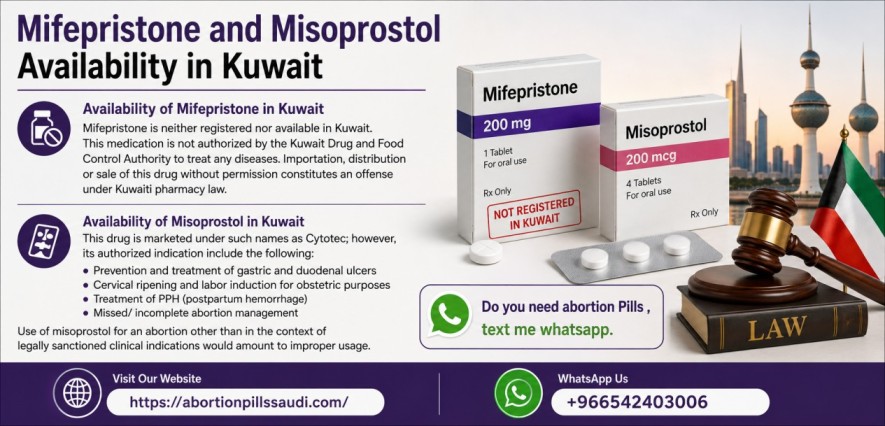
Mifepristone is neither registered nor available in Kuwait. This medication is not authorized by the Kuwait Drug and Food Control Authority to treat any diseases. Importation, distribution or sale of this drug without permission constitutes an offense under Kuwaiti pharmacy law.
Availability of Misoprostol in Kuwait
This drug is marketed under such names as Cytotec; however, its authorized indication include the following:
• Prevention and treatment of gastric and duodenal ulcers
• Cervical ripening and labor induction for obstetric purposes
• Treatment of PPH (postpartum hemorrhage)
• Missed/ incomplete abortion management
Use of misoprostol for an abortion other than in the context of legally sanctioned clinical indications would amount to improper usage.
When Is a Medical Abortion Lawful in Kuwait?
A medical abortion in Kuwait is lawful only under the following clinical circumstances:
1. Direct Threat to Life of Mother
Abortion is done when there is any medically recognized threat to the life of the pregnant mother. At least two physicians should provide written clinical evidence.
2. Presence of Lethal/Severe Defects of the Unborn
An abortion could be carried out where the unborn shows lethal defects, such as anencephaly and trisomy 13/18. It should undergo deliberations before the hospital medical ethics committee.
3. Islamic Doctrine
Islamic ethics influences the doctrine of medical ethics in Kuwait. According to scholars, a medically-induced abortion performed before 120 days of gestation is considered morally less severe. Nevertheless, the religious belief does not constitute a right to abortion in Kuwaiti civil law.
Position Taken by WHO Contradicts Legal Status in Kuwait
According to the WHO 2022 Abortion Care Guideline, universal access to medical abortion is a necessity for women as part of reproductive health care. However, such a view contradicts the existing laws of Kuwait.
WHO Global Guideline (2022) | Kuwait Legal & Regulatory Position |
Medical abortion is a core healthcare right | Abortion restricted to specific clinical indications |
Mifepristone + misoprostol should be widely available | Mifepristone not registered or approved |
Safe abortion up to 12 weeks is recommended | No defined gestational limit in statute |
Healthcare providers should offer abortion care | Only legally justified terminations permitted |
Self-managed abortion should be decriminalized | Abortion outside legal exceptions is criminal |
Clinical Procedure of Medically Supervised Abortion
It can help patients as well as clinicians understand how a medically supervised abortion is carried out especially when this procedure is legally allowed.
Stepwise Procedure (Combined Approach)
• Day 1 – Mifepristone administration: The patient takes 200 mg mifepristone orally and can experience cramps and bleeding. She can stay under observation for some time and then go home.
• Day 2-3 – Misoprostol administration (after 24-48 hours): 800 mcg misoprostol is administered sublingually, buccally or vaginally. The uterine contractions start after 1-4 hours. Bleeding will follow due to contraction of the uterus. Access to urgent medical help should be arranged.
• Day 7-14 – Follow-up consultation: Expulsion will be verified using ultrasound examination. In case there are complications, further actions will follow.
Contraindication to Medical Abortion (WHO Clinical Guidelines)
– Ectopic pregnancy confirmed or suspected
– Adrenal insufficiency or chronic use of corticosteroids
– Hereditary porphyria
– Hypersensitivity to misoprostol, mifepristone, and/or prostaglandins
– Presence of coagulopathy or ongoing anticoagulation therapy
– Uterine intrauterine devices present – must be removed before starting the process
– Advanced gestational period outside of the recommended clinical limit without proper monitoring
Difference Between Medical Abortion and Surgical Abortion
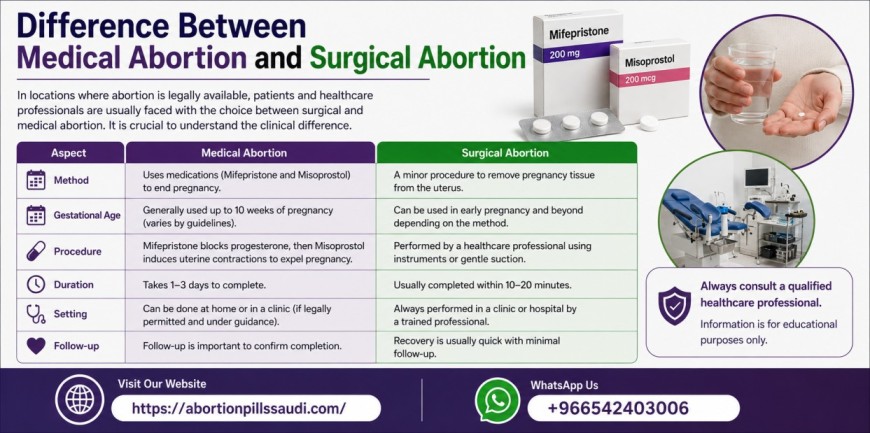
In locations where abortion is legally available, patients and healthcare professionals are usually faced with the choice between surgical and medical abortion. It is crucial to understand the clinical difference.
Feature | Medical Abortion | Surgical Abortion |
Method | Medication (pills) | Procedure (MVA or D&C) |
Gestational limit | Up to 12 weeks (WHO guideline) | Up to 24 weeks (varies by jurisdiction) |
Anesthesia required | No | Local or general |
Effectiveness | 95–98% (combined regimen) | 99%+ |
Recovery time | Several days | Same day to 24 hours |
Setting | Clinic or home (supervised) | Clinical facility |
Follow-up needed | Yes (ultrasound confirmation) | Yes (clinical review) |
This paper has an educational value. In Kuwait, the process of a surgical abortion is also controlled by laws and is not allowed in the absence of clinical indications just like medical abortion.
Potential Clinical Complications of Unsafe Abortion
According to the World Health Organization, up to 45% of all global abortions take place under unsafe conditions and the majority in restrictive societies. They include the following:
• Hemorrhaging – severe vaginal and/or cervical bleeding
• Sepsis – systemic infection because of retained tissue or a lack of sterility during the procedure
• Perforation of uterus – caused by mechanical injury
• Incomplete abortion – needs surgical intervention (D & C or MVA)
• Cervical damage – laceration caused by dilation
• Poisoning – due to unsafe abortifacients used
• Maternal death – unsafe abortion contributes greatly to maternal deaths
It is the responsibility of healthcare providers in Kuwait to treat women regardless of the way how they suffered pregnancy loss.
Use of Misoprostol in Kuwaiti Medical Clinics
In Kuwaiti licensed medical clinics, misoprostol has been found to be used in these evidence-based indications for obstetric use:
Clinical Use | Standard Dose |
Labor induction (at term) | 25 mcg vaginally or orally |
Cervical priming (pre-procedure) | 400 mcg vaginally or sublingually |
Missed or incomplete miscarriage | 800 mcg vaginally or sublingually |
Postpartum hemorrhage (PPH) treatment | 600–1000 mcg sublingually |
All applications above are physician-supervised, evidence-based, and compliant with Kuwaiti medical regulations.
Resources for Reproductive Health in Kuwait
For women in Kuwait looking for reproductive health services, the following are some sources available:
Ministry of Health Kuwait (MOH)
Kuwaiti Ministry of Health manages all licensed healthcare facilities in the country. Services for obstetric purposes can be sought from government hospitals such as Maternity Hospital, Jahra Hospital, and Mubarak Al-Kabeer Hospital.
Private Hospitals Under MOH Licensing
A few private hospitals within Kuwait provide obstetric care under the licensing by Kuwaiti Ministry of Health. Women can consult licensed OB/GYN experts regarding any issues related to their pregnancy.
Rights of the Patient in Kuwait
In accordance with the patient rights in Kuwaiti jurisdiction, patients irrespective of the situation of their pregnancy or its outcomes have the following rights:
• Access to emergency healthcare services
• Confidential consultation by licensed doctors
• Treatment of their pregnancy problems including miscarriages
• Referral to Specialist Care as Clinically Appropriate
Emergency Indications: Immediate Visit to the Doctor
In case of any of the below-mentioned symptoms after a miscarriage or an induced abortion, you must immediately report to your doctor for professional attention:
• Heavy and/or uncontrolled vaginal bleeding (soaking more than 2 sanitary towels per hour)
• Intense or increasing abdominal or pelvic pain
• Fever more than 38°C (100.4°F)
• Offensive vaginal discharge (indicating infection)
• Chills and/or shivering
• Syncope (fainting), lightheadedness, or signs of hemodynamic shock
The mentioned symptoms are indications of hemmorhage, septicemia, or an incomplete abortion.
Frequently Asked Questions (FAQ)
Q: Is the taking of abortion pills legal in Kuwait in 2026?
A: No. Taking abortion pills for any elective reason is not legal in Kuwait in 2026. The practice of medical abortion is permitted only in order to save the life of the mother, or in confirmed cases of lethal fetus abnormality.
Q: Is mifepristone available in Kuwait?
A: No. Mifepristone is not authorized and therefore not marketed in Kuwait. The Kuwaiti authorities have not approved mifepristone for any purpose. The import and/or sale of mifepristone products in Kuwait is unlawful.
Q: Is misoprostol sold in Kuwait?
A: Misoprostol drug, commercially known by its trade name, Cytotec, is sold in Kuwait for certain indications like ulcers, inducing labour, and postpartum hemorrhage. Nonetheless, misoprostol cannot be sold for induced abortions in Kuwait.
Q: WHO recommendation with regards to abortion pills
A: According to the WHO Guideline on Abortion Care 2022, it is recommended to use mifepristone and misoprostol as a combined treatment method for carrying out a medical abortion. Both medications have been included by the WHO in the list of essential medicines.
Q: Legal implications in case of illegal abortion in Kuwait
A: As per Articles 173 to 176 of the Kuwaiti Penal Code, if a woman seeks an abortion procedure illegally, then she could be imprisoned for up to 3 years. If the medical professional performs an abortion illegally, then they will have to serve a jail term for up to 5 years.
Q: Is the use of medicines during the process of abortion safe?
A: Yes, medical abortion can be done with the help of WHO approved medications under the guidance of medical professionals. This process has a very high success rate of 95-98% based on the mifepristone and misoprostol combination method.
Q: Access to abortion services for foreign nationals in Kuwait
A: For foreign nationals in Kuwait, there are similar restrictions applicable for the abortion service. Therefore, even the foreign nationals cannot opt for an abortion procedure without being under any of the legally recognized circumstances.
Q: What is the difference between mifepristone and misoprostol?
A: The drug mifepristone stops the functioning of the hormone progesterone and stops the development of pregnancy. Misoprostol causes contractions of the uterus, leading to the abortion. According to WHO, it is more effective to use both drugs together (efficacy of 95-98%); however, the drug misoprostol may be used separately when mifepristone is unavailable (efficacy of 80-85
Q: What do I do if I develop complications after the pregnancy loss?
A: Rush to the nearest emergency room without any delay. Doctors in Kuwait have an obligation to help any woman who presents with complications related to pregnancy regardless of how she lost her baby.
Conclusion
Abortion pills that were approved by WHO in Kuwait are in serious conflict in terms of legality and clinical use as of 2026. Although WHO acknowledges these drugs as safe, effective, and essential part of modern health system, the law of Kuwait limits their use to specific cases only, namely when there is an imminent threat to a woman’s health and/or in case of severe fetal abnormality.
Mifepristone is not yet registered or accessible in Kuwait. Misoprostol is registered but limited to use in obstetric and gastroenterological cases only when prescribed by a doctor. Medically-assisted abortion is prohibited and punishable according to the laws of Kuwait.
It is important to remember that in terms of medical safety, any patient experiencing difficulties due to their recent miscarriage regardless of the circumstances must see a doctor right away. Problems like heavy bleeding, septic infection, or incomplete abortion require immediate medical assistance.
For proper counseling on reproductive health issues in Kuwait, it is highly advised to consult with a licensed specialist in Obstetrics/Gynecology field.
References
• World Health Organization. (2022). Abortion care guideline. WHO Press, Geneva.
• WHO Model List of Essential Medicines, 23rd Edition (2023).
• Kuwait Penal Code, Articles 173–176.
• Kuwait Public Health Law No. 25 (1981).
• Kulier R, et al. (2011). Medical methods for first trimester abortion. Cochrane Database of Systematic Reviews. Issue 11.
• Gynuity Health Projects. Mifepristone Approvals and Availability Globally (2024).
• Raymond EG, Grimes DA. (2012). The comparative safety of legal induced abortion and childbirth. Obstetrics & Gynecology, 119(2), 215–219.