
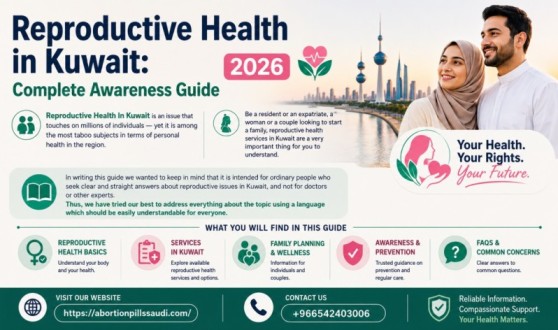
Reproductive Health In Kuwait is an issue that touches on millions of individuals — yet it is among the most taboo subjects in terms of personal health in the region. Be a resident or an expatriate, a woman or a couple looking to start a family, reproductive health services in Kuwait are a very important thing for you to understand.
In writing this guide we wanted to keep in mind that it is intended for ordinary people who seek clear and straight answers about reproductive issues in Kuwait, and not for doctors or other experts. Thus, we have tried our best to address everything about the topic using a language which should be easily understandable for everyone.
Definition Of Reproductive Health
When people inquire about “what is reproductive health,” the definition by World Health Organization indicates that reproductive health is a condition of total physical, mental, and social wellbeing, not merely the absence of illness, in all aspects concerning the reproductive system, its function, and process.
This definition in simpler terms implies that reproductive health is about your capacity to reproduce in case you decide to do so, the right to make decisions about your sexuality and reproduction, and access to safe and appropriate healthcare.
The topic of reproductive health is quite extensive:
• Family planning and birth control measures
• Pregnancy and prenatal services
• Prevention and management of sexually transmitted infections
• Fertility management
• Menstruation and hormonal wellbeing
• Cancer screening
• Menopause support and hormonal wellbeing for women
It should be noted that the term does not relate only to women – the health of men in relation to their reproductive system also plays an important role in reproductive health.
State of Awareness Regarding Reproductive Health in Kuwait
Over the years, awareness regarding reproductive health in Kuwait has increased immensely. There have been initiatives by the Ministry of Health of Kuwait in terms of investing in programs for maternal and child health and having facilities which can cater to all kinds of reproductive health concerns, both government as well as privately run.
It should be noted that due to cultural sensibilities, discussion regarding such matters is a bit reserved, but it must be noted that healthcare professionals in Kuwait are trained to handle such queries while maintaining utmost confidentiality.
There have been campaigns conducted by the Ministry of Health of Kuwait along with non-governmental organizations in terms of increasing awareness among women and couples regarding reproductive health issues. In addition to these efforts, there is an increase in schools and work places participating in raising awareness about reproductive health.
Reproductive Health and Law in Kuwait
Knowledge about the legal context is very necessary before seeking any kind of reproductive health service. Reproductive health and law in Kuwait are very interdependent, and you need to know about the reproductive services that are available within the framework of law.
Family Planning and Contraception
There are a number of contraception services that are provided legally in Kuwait to married couples. Family planning services can be availed from the maternal and child health clinics by the Ministry of Health of Kuwait. Various forms of contraceptive pills, intrauterine devices, and other methods are readily available.
Prenatal and Maternal Care
All prenatal services are completely legal and highly recommended in Kuwaiti health policy. There are a large number of maternal health services that are funded by the government of Kuwait, and these services can be enjoyed by Kuwaiti citizens and also by legal residents.
Abortion Laws in Kuwait
It is vital to discuss this subject matter in the right manner. The law on abortions in Kuwait allows for this practice only if there are legitimate reasons for it; that is, it is deemed necessary in order to prevent a threat to the life or health of the pregnant woman in accordance with the approval of the Medical Committee. There are no other grounds for an abortion, and all abortions must be carried out in the licensed medical institution.
People who want to learn more about pregnancies should visit a licensed gynecologist at the clinic in Kuwait.
Sexual Health and STI Testing
The testing for sexually transmitted diseases is provided by the licensed hospital facilities and clinics.Privacy is guaranteed in accordance with Kuwaiti healthcare law.
Best Reproductive Health Service Kuwait: Where to Seek?
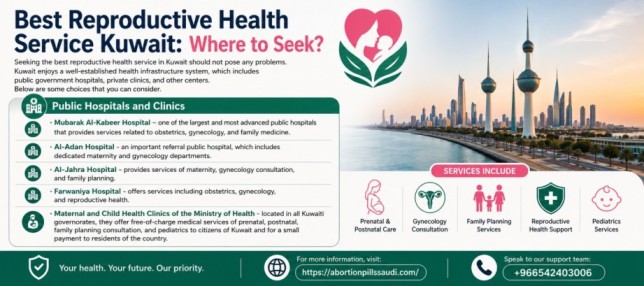
Seeking the best reproductive health service in Kuwait should not pose any problems. Kuwait enjoys a well-established health infrastructure system, which includes public government hospitals, private clinics, and other centers. Below are some choices that you can consider.
Public Hospitals and Clinics
• Mubarak Al-Kabeer Hospital – one of the largest and most advanced public hospitals that provides services related to obstetrics, gynecology, and family medicine.
• Al-Adan Hospital – an important referral public hospital, which includes dedicated maternity and gynecology departments.
• Al-Jahra Hospital – provides services of maternity, gynecology consultation, and family planning.
• Farwaniya Hospital – offers services including obstetrics, gynecology, and reproductive health.
• Maternal and Child Health Clinics of the Ministry of Health – located in all Kuwaiti governorates, they offer free-of-charge
medical services of prenatal, postnatal, family planning consultation, and pediatrics to citizens of Kuwait and for a small
payment to residents of the country.
Selected Private Hospitals and Clinics
• Al Salam International Hospital – Famous for its robust departments in gynecology and obstetrics.
• Royale Hayat Hospital – Provides specialist maternal-fetal medicine and fertility counseling services.
• New Mowasat Hospital – Known for providing diverse women’s health services inclusive of reproductive endocrinology.
• Dar Al Shifa Hospital – Renowned for its departments of obstetrics and fertility care.
• Hadi Clinic – Specializes in reproductive assistance services including IVF.
Contact Information for Ministry of Health
• Ministry of Health, Kuwait – Website address: www.moh.gov.kw
• Call center for MOH: 1800100 (in Kuwait)
• Referrals and information on health centers and maternal health programs
Understanding Reproductive Health Care Access in Kuwait
Reproductive health care accessibility in Kuwait appears rather organized although depending on your residence and required reproductive service it may be complicated.
Kuwaiti Citizens
Citizens of Kuwait are provided with free healthcare at governmental hospitals and MCH centers and enjoy reproductive health care including prenatal visits, delivery procedures, postnatal care, contraception counseling, and gynecology consultations.
Residents of Kuwait
Expatriates who are registered and hold a valid civil ID card can seek out healthcare services in any MCH center but some of them might have to pay. Expatriates often use private hospitals due to shorter queues and the availability of English-speaking staff. Gynecology and reproductive health consultations may be covered by one’s health insurance policy.
How to Use Your Healthcare Options
• Registration with the nearest MCH center for maternal health care if one is pregnant.
• Bring your civil ID or passport each time when visiting health institutions.
• Find out whether your health insurance plan includes that particular hospital/clinic.
• Many hospitals feature a women’s department – visit one and ask for a gynecologist.
There are certain emergencies in relation to reproductive health that should receive urgent care, and the hospitals in Kuwait can manage all these conditions. The reproductive emergencies include the following:
• Ectopic pregnancy (a serious condition which requires an emergency surgery)
• Spontaneous abortion (miscarriage needing treatment)
• Excessive menstruation bleeding or hemorrhage
• PID (pelvic inflammatory disease)
• Pregnancy complications like pre-eclampsia or placental complications
• Ruptured ovarian cyst
Should you or anyone around you experience any reproductive health emergency, visit the nearest hospital’s emergency room immediately. There are special emergency obstetrics and gynecological departments at every public hospital in Kuwait that run throughout the day. Delay is strictly not advised because it may worsen the condition.
Emergency Contacts in Kuwait
• 112 for Police / Ambulance Service
• 175 Ministry of Health Emergencies Line
Reproductive health guidelines for living in Kuwait
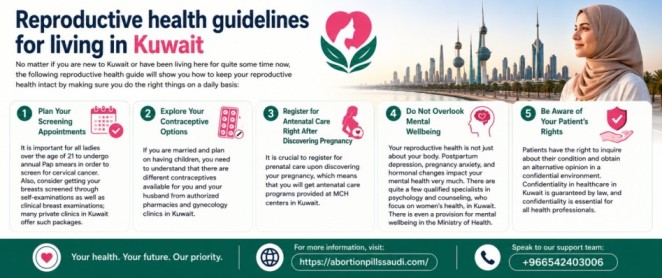
No matter if you are new to Kuwait or have been living here for quite some time now, the following reproductive health guide will show you how to keep your reproductive health intact by making sure you do the right things on a daily basis:
1. Plan Your Screening Appointments
It is important for all ladies over the age of 21 to undergo annual Pap smears in order to screen for cervical cancer. Also, consider getting your breasts screened through self-examinations as well as clinical breast examinations; many private clinics in Kuwait offer such packages.
2. Explore Your Contraceptive Options
If you are married and plan on having children, you need to understand that there are different contraceptives available for you and your husband from authorized pharmacies and gynecology clinics in Kuwait.
3. Register for Antenatal Care Right After Discovering Pregnancy
It is crucial to register for prenatal care upon discovering your pregnancy, which means that you will get antenatal care programs provided at MCH centers in Kuwait.
4. Do Not Overlook Mental Wellbeing
Your reproductive health is not just about your body. Postpartum depression, pregnancy anxiety, and hormonal changes impact your mental health very much. There are quite a few qualified specialists in psychology and counseling, who focus on women’s health, in Kuwait. There is even a provision for mental wellbeing in the Ministry of Health.
5. Be Aware of Your Patient’s Rights
Patients have the right to inquire about their condition and obtain an alternative opinion in a confidential environment. Confidentiality in healthcare in Kuwait is guaranteed by law, and confidentiality is essential for all health professionals.
Selecting a Suitable Reproductive Health Services Caregiver
There are several considerations to be made when selecting a reproductive health services caregiver:
• Ensure that the physician or institution holds a license from the Ministry of Health Kuwait.
• Consider board-certified physicians in Obstetricians and Gynecology or Reproductive Endocrinologists.
• Inquire if the institution has multilingual capabilities since Arabic may not be your primary language in which case there
is no need to worry in Kuwait.
• Find out what patients have said about their experience at the institution and verify the accreditation of the facility by
the Joint Commission International.
• Make sure your insurance covers any procedures before booking an appointment.
Frequently Asked Questions (FAQ)
Q1: What is Reproductive Health In Kuwait?
Reproductive Health In Kuwait refers to the general good health state of an individual’s body, mind, and society as far as their reproductive organs are concerned. This is including the health services that are provided regarding pregnancy and childbirth, family planning, reproduction, preventing STIs, and other women-related services.
Q2: Are contraceptives allowed in Kuwait?
Yes. The use of contraceptives is legal in Kuwait within the confines of married individuals. Contraceptives are freely accessible at any recognized pharmacies, gynecological centers, and MCH centers at the Ministry of Health.
Q3: Where are women able to get healthcare facilities?
Some major public hospitals include Mubarak Al-Kabeer, Al-Adan, Al-Jahra, and Farwaniya hospitals. Some private hospitals are Royale Hayat, New Mowasat, Al Salam International, and Dar Al Shifa. All these hospitals have separate departments for gynecology and obstetrics.
Q4: Is prenatal care free in Kuwait?
Yes, for citizens of Kuwait, prenatal care is free in public hospitals and MCH centers. For legal residents, it costs very little. Moreover, private clinics are abundant in the region, and health insurance is provided by the employees’ employers.
Q5: When is there a reproductive health emergency?
Ectopic pregnancy, severe vaginal bleeding, complications of miscarriage, acute pain in the pelvis, ruptured ovarian cyst, and preeclampsia are reproductive emergencies. Seek immediate attention in the ER of the nearest hospital or dial 112.
Q6: How do I contact a licensed gynecologist?
The MOH website at www.moh.gov.kw offers a listing of licensed physicians and clinics in Kuwait. Otherwise, you can contact private hospitals and make sure that the professional you choose is licensed by the MOH.
Q 7: Is reproductive health care confidential?
Yes. Under Kuwaiti healthcare laws, confidentiality is mandatory for all medical professionals. Your consultations, lab reports and medical records regarding your reproductive health will be strictly confidential.
Q8: What are the services provided in regard to fertility treatment?
Services in Kuwait include fertility consults, hormone assessments, IVF and reproductive endocrinology in specialized clinics like Hadi Clinic, Royale Hayat, and New Mowasat Hospital.
Q9: Do expatriates have access to reproductive health services?
Yes. Public healthcare facilities can be accessed by residents holding a civil ID issued by the country of Kuwait. The expats normally prefer private clinics that provide their services in English and accept insurance from foreign employers.
Q10: What are the ways in which I could contact the Ministry of Health?
Hotline MOH Kuwait: 1800100 | Health Emergency Services: 175 | Official Website: www.moh.gov.kw. They would help in directing you to the closest MCH or hospital in case of any reproductive health issue.
Conclusion:
Reproductive Health In Kuwait is not a matter of being taboo; it is an essential part of the total well-being of your health and lifestyle. Whether you are seeking prenatal assistance, infertility advice, contraceptive guidance, urgent assistance, or just need a competent gynecologist, Kuwait boasts an extensive network of healthcare professionals that will be able to help.
The important thing is to make the first move. To schedule an appointment, get answers to the questions you have been postponing, or just get educated on what is provided by the healthcare facilities in Kuwait.
This guide is solely meant for informational and educational purposes and should not be viewed as any kind of medical consultation. For individual medical consultations always contact a registered healthcare provider in Kuwait.
Looking to make the first move? Contact Ministry of Health Kuwait at 1800100 or log on to www.moh.gov.kw for reproductive health service nearest you. Or Visit Our Website and contact Dr.Marry.
Note: This article is solely for educational and information purposes. This is not meant to be a substitute for any medical, legal, or other professional advice. All medical decisions should be taken after consulting a medical practitioner in Kuwait.
One Response