
Sexual and reproductive health is an integral part of each and every individual’s health. It covers much more than pregnancy and birth; it involves the care of fertility, family planning, sexual health, STI prevention and treatment, menstruation, hormones, and emotional and psychological aspects of intimate relationships. Giving people good information and quality care means that they can make informed and confident decisions about their bodies, their relationships and their families.
In Oman, sexual and reproductive health services have seen tremendous growth in the past few years. Under the guidance of the national health strategy based on Oman Vision 2040, the Ministry of Health (MOH) is continuing to strengthen the healthcare network in Muscat, Salalah, Sohar, Nizwa and all governorates. Oman is making significant progress to provide quality reproductive health services across the country, from the country’s first government fertility center established in 2024 to a nationwide network of more than 49 MOH hospitals and hundreds of primary health centers.
This guide will help you get a comprehensive understanding of sexual and reproductive health in Oman, from trusted resources, with respect to different cultures, and with a medical basis — with information about where to find it, what it is, and how you can take care of your reproductive health and respect it at the same time.
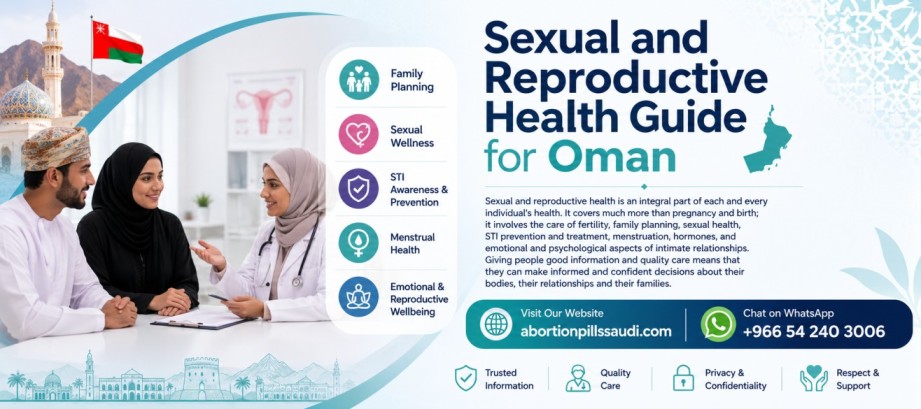
Sexual and Reproductive Health is very important
Good reproductive health is a healthy condition throughout life with respect to the reproductive system in physical, emotional and social aspects. It is defined by the World Health Organization (WHO) as the capacity to enjoy a satisfying and safe sexual life, to be able to reproduce and to be able to choose whether, when and how to do so.
The impact of neglect of reproductive health is so great. If left untreated, sexually transmitted infections (STIs) can lead to infertility, ectopic pregnancy, pelvic pain and an increased risk of cancer. Hormonal imbalance, including polycystic ovary syndrome (PCOS), endometriosis and thyroid disorders can negatively affect a woman’s quality of life for years without diagnosis. Poor antenatal care increases the chances of both maternal and foetal complications.
Medical Insight: Worldwide, 10 – 13 percent of couples experience delayed pregnancy or infertility. Dr. Rahma Al-Ghabshi, Senior Consultant at the Royal Hospital Oman (RHO) for Obstetrics and Gynecology, said that infertility is a public health problem and not a private one, in that it affects the individual, family, community and country.
A healthy investment in reproductive health yields better maternal outcomes, fewer infant deaths, less healthcare expenditure in the long-term, better mental health and enables sustainable family planning. The health of sexual and reproductive organs is a medical and social necessity in Oman, where the population is youthful and the government is investing in the country’s development under the Vision 2040 plan.
A project on Sexual and Reproductive Health services in Oman
The reproductive health service is available in a broad and expanding range of services in Oman, supported by both a large-scale public health system and a well-regulated private sector. The Ministry of Health has around 49 hospitals in all governorates with hundreds of health centers and preventive health centers. As per the Unified Health Insurance Policy (Dhamani), the expatriates and the private sector employees have access to coverage for essential women’s health services such as essential health products and services for maternity and selected preventive services.
Core Services Available
he management of high-risk pregnancies and antenatal (prenatal) care is being improved.Management of high risk pregnancies and antenatal (prenatal) care is improving.
The postnatal and postpartum care of the mother and the newborn.
Counselling and provision of contraceptive services for family planning.
Fertility treatment, such as IVF and assisted reproductive technology (ART)
STI testing, counseling and management
Screening for cervical cancer and breast cancer.
Gynecological oncology – diagnosis and treatment of reproductive cancers.
Menstrual health and treatment of hormonal disorders
Reproductive endocrinology clinics
Urogynecology and Pelvic Health Rehabilitation
A healthcare program for both mother and child.Mother and child health program.
Trusted Local Hospitals and Clinics in Oman
For specialized reproductive health care in Oman, the following institutions are among the most trusted:
Royal Hospital, Muscat (Ministry of Health): One of the large tertiary referrals hospitals established in 1987, this hospital has reproductive endocrinology clinics, obstetrics and gynecology emergency services and specialist outpatient clinics. It is used as a training centre for the OMANA Post Graduate residency Programme of the Oman Medical Specialty Board in O&G.
Khoula Hospital — Al Wattayah Obstetrics and Gynecology Complex, Muscat: This center is the most modern with the latest and most advanced laboratory technologies, and provides couples with diagnostic and therapeutic services related to fertility, such as IVF in the case of tubal obstruction, male infertility, ovulation disorders and unexplained infertility, from all over the governorates. Its first year of operation is to address 1,000 cases.
Sultan Qaboos University Hospital (SQUH), Al Khoud, Muscat: Academic teaching hospital with a department of obstetrics and gynecology. SQUH offers complex O&G services, runs specialist doctor training programs and performs Omani women’s health clinical research. It provides antenatal clinic, gynecological services and specialist consultations.
Sultan Qaboos Hospital, Salalah (Dhofar Governorate): a 515-bed capacity that cares for more than 7200 patients every year in its obstetric emergency unit. It offers obstetrics, gynecology, urology and various women health services to the population of Dhofar.
Badr Al Samaa Group of Hospitals (private, nationwide): One of the key private healthcare providers in Oman providing full-service women health, obstetrics, gynecology, fertility and reproductive health consultation services in multiple hospitals.
Muscat Private Hospital and Al Nahda Hospital, Muscat: high-quality private hospitals offering a comprehensive range of gynecological and obstetric services, such as prenatal packages, management of high-risk pregnancies and postnatal care.
Primary care access: health centres from any governorate of the MOH are allowed to do initial reproductive health consultation and refer to specialists in Gynecology, Urology or Reproductive Endocrinology.
Rights of Sexual and Reproductive Health
Everyone is entitled to the right to obtain accurate health information, have dignity at the moment of medical care, and be able to freely choose when and how they want their reproductive life to proceed. Such rights are universally recognized by WHO and the United Nations and can also be found in the health policy of Oman.
The Ministry of Health of Oman has a well-established rights framework for patients. People have the right to know their diagnosis and treatment options in the language they speak, to ask any question, to get another expert opinion on their case, and give their informed consent to undergo any procedure. Such a framework applies to reproductive health services as well.
Patient Rights in Oman: It is your right to be treated in a manner that is respectful and non-discriminating. It is within your rights to inquire from your physician about all the possible treatment modalities and their pros and cons. Your medical records remain private. You have the right to refuse any medical procedure that you do not give your consent for and at any time you may seek a second opinion.
Oman has successfully reached an important milestone in the area of public health and reproductive rights. The Sultanate has been certified by the WHO on the elimination of mother-to-child transmission (EMTCT) of both HIV and syphilis. This accomplishment is the result of three decades of continuous efforts in the realm of public health.
Reproductive Health and Family Planning
Family planning is one of the major constituents of reproductive health care. This entails providing people and couples with information on how to choose the right time for having babies, how many babies they can bear, and the spacing between their pregnancies. The services of family planning are provided as part of the primary healthcare program of the MOH, and there are no charges for those using these services at the government health centers.
Methods of Birth Control in Oman
Different methods of contraception are provided by the public and private healthcare facilities in Oman, including:
Birth control pills — can be prescribed by doctors, including gynecologists and general practitioners
Intrauterine device (IUD) — a very efficient method
Injectable and implanted birth control contraceptives
Male and female condoms — can be bought in pharmacies without any prescription
Natural or fertility awareness birth control methods
Women need to seek advice from their healthcare professionals to find a contraception method most appropriate to their health condition, reproductive aspirations, and personal needs. Counseling on different methods is provided by MOH health center healthcare professionals free of charge.
Fertility Treatments in Oman
In case couples experience problems with conceiving, Oman provides its residents with modern fertility treatments in the framework of the country’s public health system. At the government fertility center in Khoula Hospital’s Al Wattayah Obstetrics and Gynecology Complex, such infertility issues as blocked fallopian tubes, low number or reduced movement of sperm cells, inability to ovulate or unexplained infertility can be treated via IVF (in vitro fertilization). Moreover, fertility preservation, which includes cryopreservation of eggs, sperm cells or embryos of patients undergoing cancer therapy, is provided by the center. Referrals from the departments of Obstetrics and Gynecology in all Oman’s governorates are possible.
Private fertility clinics in Muscat offer the full cycle of assisted reproductive technologies (ART), starting from ICSI and IUI treatments and ending with conventional IVF.
Reproductive Health Needs of Women
The health needs of women are changing during all stages of life from teenage years to perimenopause. Meeting these needs in advance is one of the best ways to take care of the future wellbeing of a woman.
Menstrual Health
Irregular, painful, or even non-existent menstruation are not conditions one should merely accept. These may be due to other diseases that may include Polycystic Ovary Syndrome (PCOS), Endometriosis, Uterine Fibroids, and Thyroid Dysfunction among others, all of which can be treated. Should you experience irregularities in your menstrual cycle, extreme pain, or even a lack of menstruation, make an appointment with a gynecologist as early detection always helps.
Antenatal Care and Maternal Health
Antenatal health care plays a key role in maintaining a healthy pregnancy. In Oman, MOH has advised that pregnant women must schedule their first antenatal visit in the first trimester as soon as possible. Antenatal visits are used to monitor the health and development of the fetus as well as the mother’s blood pressure, gestational diabetes, anemia, and other complications. Pregnancies that fall into high risk categories include multiple pregnancies, women who are in advanced maternal age, and those that experienced pregnancy loss before.
Health of the Cervix and the Breast
The primary cause of cervical cancer is infection of the cervix with HPV, which can be vaccinated against and tested for using the Pap smear. The health authorities of Oman suggest regular cervical screenings for all sexually active women. It is also crucial to take care of breast health: Women need to perform regular self-examinations and undergo mammograms according to the recommendations of the physician, starting from the age of 40.
Awareness and Education in the Sphere of Reproductive Health
There is an increased level of reproductive health awareness among Oman citizens due to the implementation of health campaigns, digitalization of health information, and a new generation of health-conscious Oman women. In particular, according to the statistics provided by the Ministry of Health, around 160,000 women were involved in various health awareness projects in recent years.
Within the framework of the national “Healthy Woman” project worth OMR 2.5 million for women health services, investments have helped to increase the number of women undergoing regular health check-ups by 25%. Moreover, the government is going to create 12 additional women health centers all over Oman.
The objectives of the reproductive health education programs in Oman include the safety of pregnancy planning, postpartum psychological care, awareness of contraceptives and STIs, and the necessity of gynecological examination. Health educators, nurses, and midwives in MOH health centers have a significant contribution to educating people on these issues especially in the rural and deprived areas.
Sexual and Reproductive Health Counseling
Reproductive health counseling is aimed at giving the opportunity to a person or a couple to speak about their problems in a confidential manner concerning any questions related to conception, sexual intercourse, birth control, pregnancy and birth complications, or overcoming losses in pregnancy. The good counseling should connect the medical information and the client’s decisions.
In Oman, reproductive health counseling can be obtained in the following institutions:
Health centers and women’s health clinics of MOH throughout all governorates
O&G department in Royal Hospital, Khoula Hospital, and SQUH
Private hospitals such as Badr Al Samaa Group and Muscat Private Hospital
Infertility centers (for couples dealing with infertility problems)
Mental health care forms an essential component of reproductive care. Mental illnesses like postpartum depression, anxiety related to infertility, and mental trauma caused by miscarriage require professional attention. The mental health care system in Oman has been developing consistently, and requests for referral to a psychologist/psychiatrist can be made via your family doctor/gynecologist. Feel free to seek help, because it shows only strength.
Preventive Reproductive Health Care
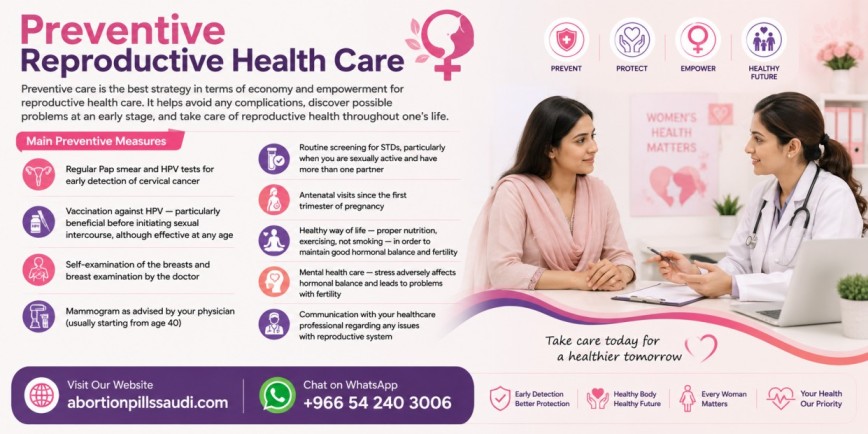
Preventive care is the best strategy in terms of economy and empowerment for reproductive health care. It helps avoid any complications, discover possible problems at an early stage, and take care of reproductive health throughout one’s life.
Main Preventive Measures
Regular Pap smear and HPV tests for early detection of cervical cancer
Vaccination against HPV — particularly beneficial before initiating sexual intercourse, although effective at any age
Self-examination of the breasts and breast examination by the doctor
Mammogram as advised by your physician (usually starting from age 40)
Routine screening for STDs, particularly when you are sexually active and have more than one partner
Antenatal visits since the first trimester of pregnancy
Healthy way of life — proper nutrition, exercising, not smoking — in order to maintain good hormonal balance and fertility
Mental health care — stress adversely affects hormonal balance and leads to problems with fertility
Communication with your healthcare professional regarding any issues with reproductive system
The wide network of Oman’s laboratories (there are more than 260 public and 212 private laboratories across the country) enables antenatal screening, diagnostics of STDs and many other tests related to reproductive health. The Directorate General for Quality Assurance of the Ministry of Health is responsible for regulation of all laboratories.
Frequently Asked Questions (FAQ)
Q: What reproductive health services are provided for free in Oman?
Answer: Omani citizens are eligible for free medical services in all MOH hospitals and clinics, including prenatal and postnatal care, family planning consultations, and contraception methods. Citizens of the GCC countries have a right to free health care in the public hospitals. Foreigners usually get health care through the Dhamani health insurance program offered by their employers, which includes maternal health services and preventive services.
Q: Where is the government fertility center in Oman?
Answer: The first public sector fertility center in Oman operates out of the Al Watayah OB/GYN Complex at the Khoula Hospital in Muscat. It opened its doors in February 2024 and gets referrals from the OB-GYN departments of all governorates.
Q: What hospitals in Oman have departments of reproductive health for women?
A: Some of the government hospitals where one can receive such treatments are the Royal Hospital and Khoula Hospital, both situated in Muscat. Other government hospitals include Sultan Qaboos University Hospital (SQUH), which is located in Al Khoud and Sultan Qaboos Hospital, located in Salalah. As far as private hospitals go, there are Badr Al Samaa Group of Hospitals and Muscat Private Hospital.
Q: Can people undergo an STI test with confidentiality in Oman?
A: Yes, STI testing can be done in the hospitals and laboratories under the jurisdiction of the MOH in both private and public hospitals of Oman. There are quite a few laboratories in Oman, 260 of which are public and 212 private, all registered in MOH laboratories. The testing of HIV and other STDs is conducted including during antenatal care.
Q: What shall I do if I suspect any reproductive health issue?
A: Do not delay when faced with symptoms including irregular/missed periods, pain in the pelvis/lower abdomen, abnormal discharge, pain during intercourse, infertility, and/or lump in the breast. You can approach any MOH health center or visit a gynecologist as soon as possible. You can always refer yourself to specialists through your GP. Early diagnosis and treatment always ensure good health results.
Q: Is there any health insurance covering reproductive health in Oman?
A: According to the Unified Health Insurance Policy (Dhamani) of expats/private sector employees, services of maternal healthcare and some selected women’s health services are included under the plan. The individual policies differ, so it is wise to check your individual coverage particularly for reproductive and fertility services.
Q: How can I book a reproductive health appointment with the MOH in Oman?
A: The appointments can be scheduled at the health centers and hospitals run by the MOH through the electronic health portal of the Ministry of Health Oman available at moh.gov.om. Alternatively, appointments can also be booked by reaching out to the concerned hospitals or health centers directly. Private hospitals like Badr Al Samaa Group have their own methods of booking through the internet and by telephone calls.
Conclusion
The sexual and reproductive health is central to the dignity of oneself, family, and community. Whichever may be the issue of reproductive health that one is facing whether it is in relation to menstrual health, pregnancy, infertility, contraception or any other matter, it becomes vital for them to know what to do.
Indeed, the Omani healthcare system has seen commendable developments in this respect. Whether it be the validation in the history of prevention of mother to child transmission of HIV and Syphilis or the establishment of the first public fertility center in the country at Khoula Hospital, Oman is making meaningful efforts toward sexual and reproductive health for its citizens. With the help of such reliable hospitals as the Royal Hospital, Sultan Qaboos University Hospital, and increasing numbers of MOH health centers and clinics in Oman, the quality healthcare service is becoming more available in all governorates of the country.
You matter – sexually and reproductively. Take an active role in preserving your reproductive health by scheduling a test, consulting your physician, or visiting the nearest health center. Investing in your reproductive well-being today is one of the most valuable things that you could do for yourself. More info visit our website Abortion saudi or contact Dr. Marry.
– Medical Review and Production for the Oman healthcare setting. An informational article only. Always consult a qualified healthcare provider for individual advice.
Useful Contacts in Oman:
• Ministry of Health Oman: www.moh.gov.om
• Royal Hospital, Muscat: +968 2459 9000 | www.moh.gov.om/hospitals
• Khoula Hospital (Fertility Center), Muscat: +968 2456 3625
• Sultan Qaboos University Hospital (SQUH), Al Khoud: +968 2414 1111
• Badr Al Samaa Group of Hospitals: www.badralsamaa.com
• MOH Health Portal (Book Appointment): www.moh.gov.om/en/